
Metallurgy / Metal Refining
How It Is Used
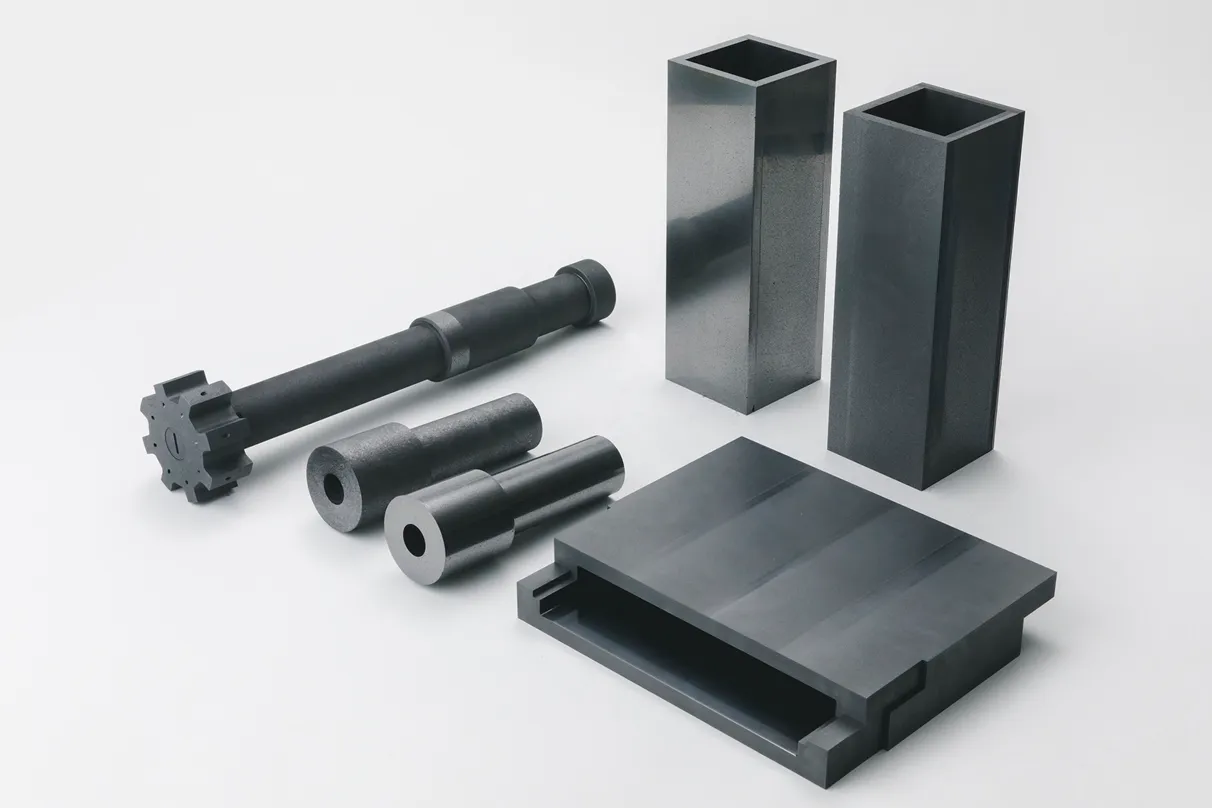
Taking advantage of graphite’s excellent heat resistance and thermal shock resistance, graphite is used in all types of metallurgical components including molds, dies, slip plates, crucibles, boats, funnels, sliding plates, and cooling frames.
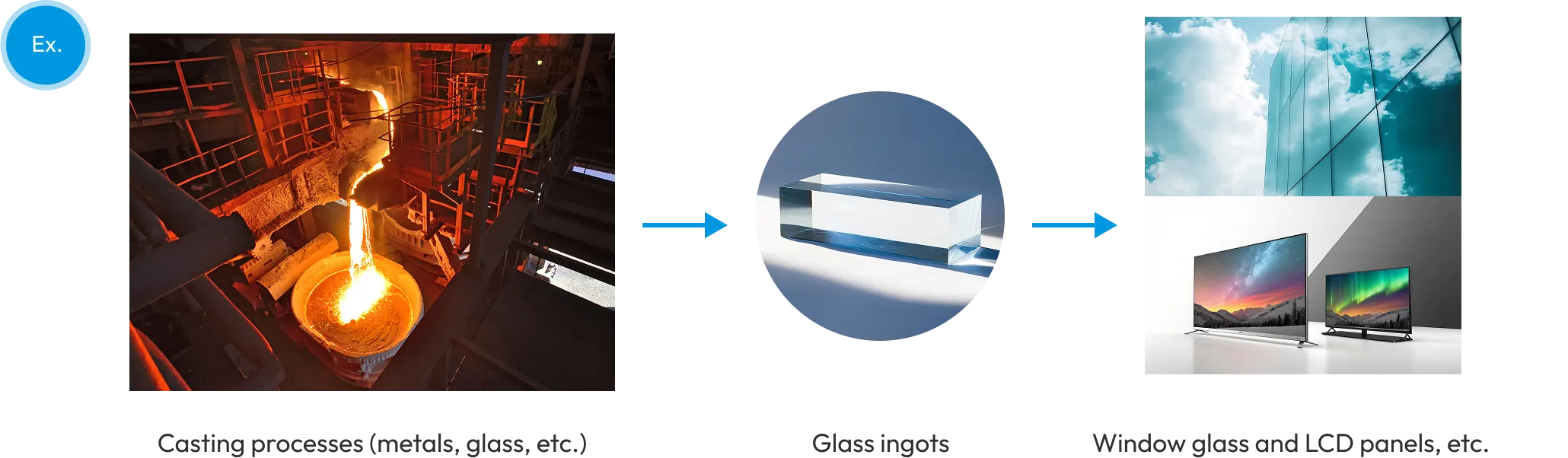
Representative examples of graphite molds include molds for electroformed bricks used in casting glass and LCD panels. The common method involves machining graphite to create molds and pouring molten glass into them.
Application Examples
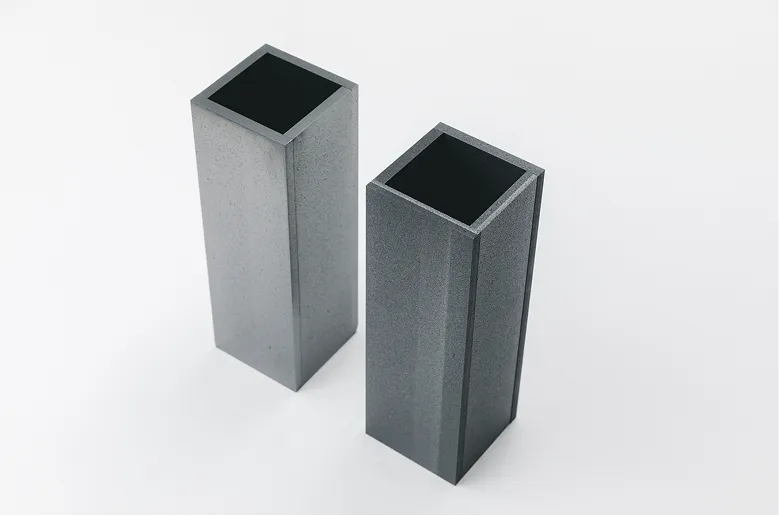
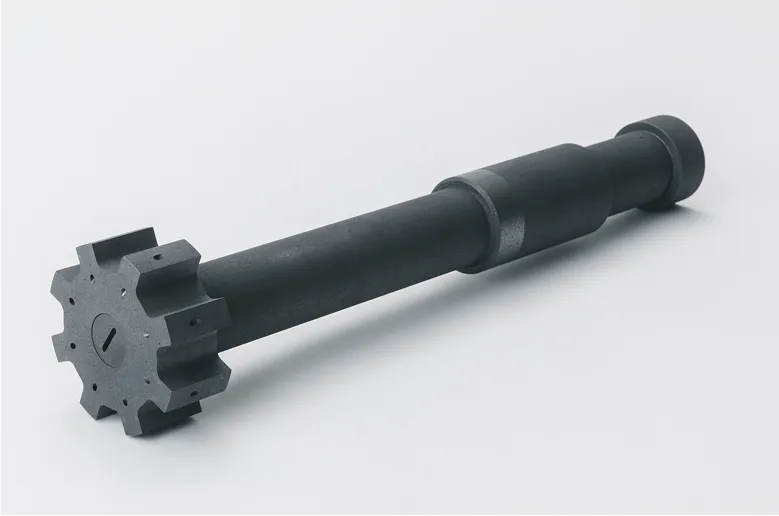
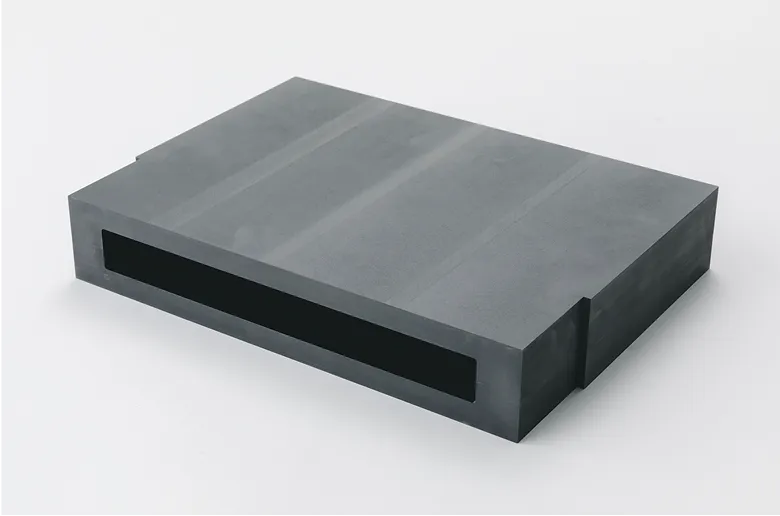
Electroformed bricks are products cast using graphite molds.
Electroformed bricks are extremely dense and strong compared with conventional refractories. In addition, their stable mineral composition provides excellent corrosion and wear resistance.
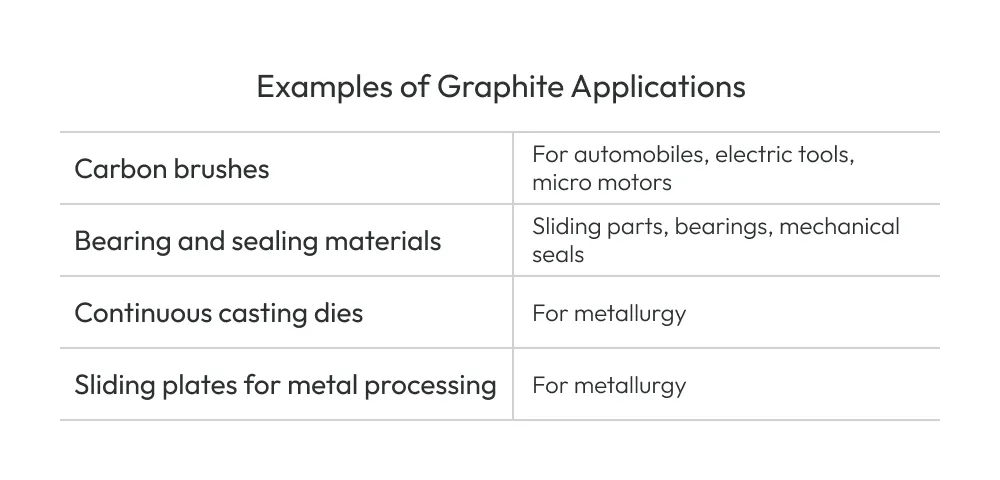
In the refining of smelted metals to higher purity, graphite is used for molten metal stirring rotors. Graphite is also used for continuous casting dies because it has high heat resistance and low wettability with molten metals.
Continuous casting is widely used not only in the steel industry but also in the production of non-ferrous metals such as copper and aluminium. The manufactured products are used in various fields including automotive, shipbuilding, and construction.
The Advantages of SEC Carbon Products for Metallurgy / Metal Refining
Excellent Heat Resistance
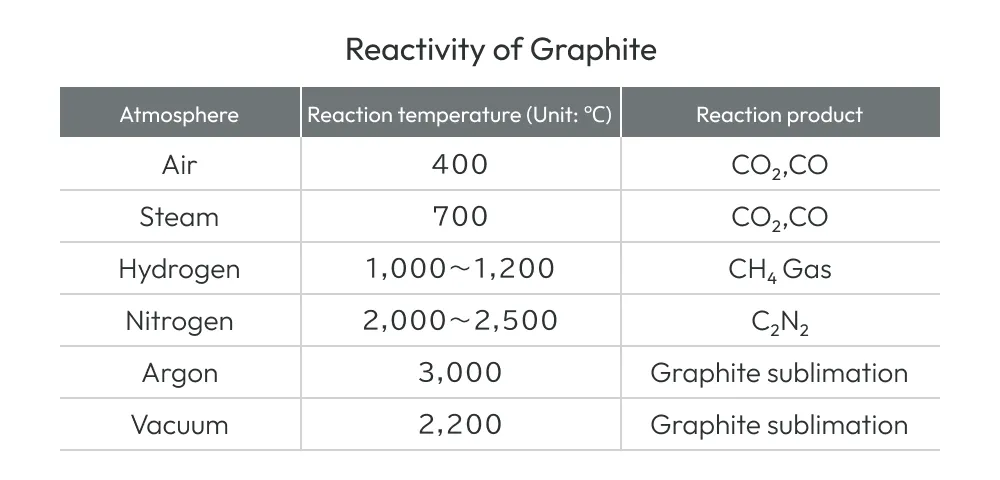
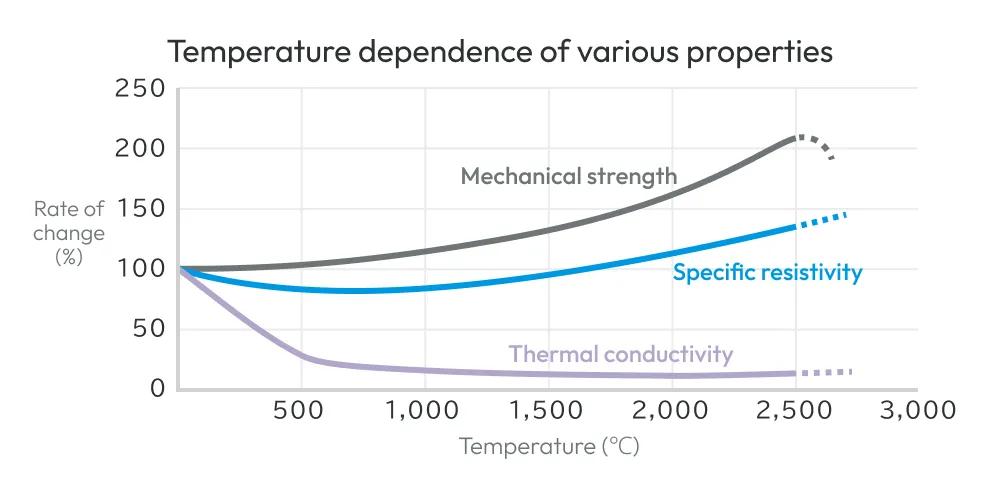
Our Graphite can be used up to approximately 3,000℃ in inert atmospheres and up to about 400℃ in oxidizing atmospheres. One of special characteristics of graphite is that mechanical strength increases as the temperature gets higher up until 2,500℃ in inert atmospheres.
Low Coefficient of Thermal Expansion
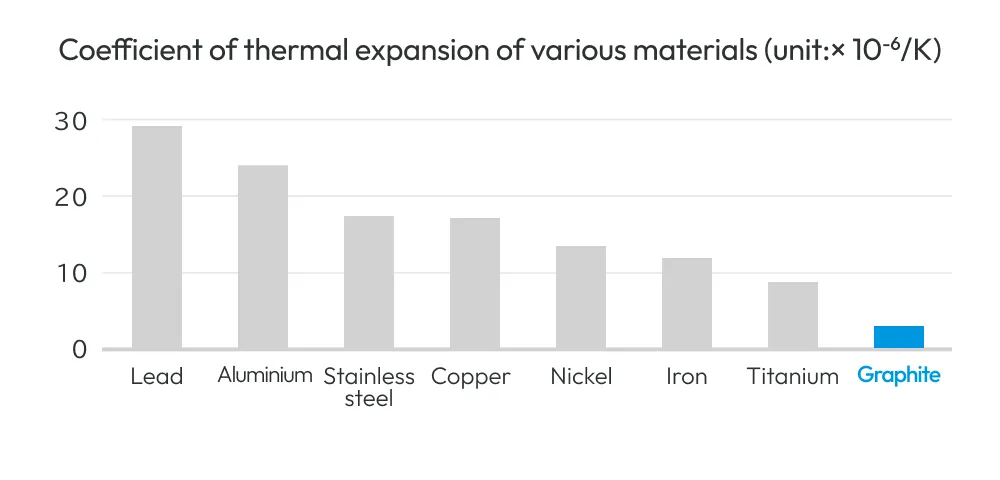
The coefficient of thermal expansion is less than half that of metals such as iron and copper.
Excellent Thermal Shock Resistance
Our Graphite is extremely resistant to the appearance of cracks and fractures even when exposed to sudden heating or cooling.
Self-lubricating and Excellent Sliding Properties
Our Graphite has self-lubricating properties and does not damage the counterpart material.

(Technical) Specification
| Grade | Size (mm) |
Maximum grain size (mm) |
Coefficient of thermal expansion (×10⁻⁶/K) |
Thermal conductivity (W/mk) |
Features | |
|---|---|---|---|---|---|---|
| Rectangular | PSG-324 | 670 × 450 × 2650 | 12.0 | 1.0 | 210 |
This grade features large constituent particle sizes, offering excellent thermal conductivity, thermal shock resistance, and gas permeability. |
| PSG-11 | 670 × 450 × 3000 | 2.3 | 4.5 | 150 |
This grade has excellent cost performance and wear resistance. |
|